
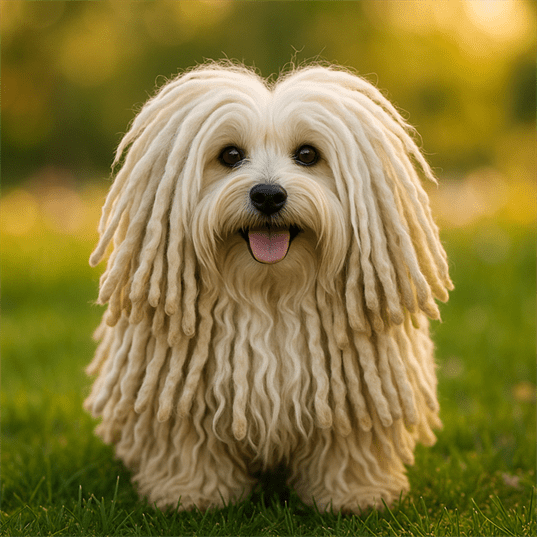
The Havanese dog, often affectionately called the “Hav,” is a small yet sturdy companion breed that traces its roots back to the aristocratic circles of 18th‑century Cuba, where it was prized as a pampered pet of the island’s elite; the breed’s name derives from Havana, the capital city, and its lineage is believed to be a blend of the now‑extinct Bichón Tenerife, the Maltese, and various other Bichón‑type dogs that were brought to the Caribbean by Spanish settlers, creating a versatile and resilient toy breed that could thrive in both tropical heat and the cooler indoor environments of the Cuban palaces. Recognized by the American Kennel Club in 1996 and later by the FCI, the Havanese stands between 8½ and 11½ inches tall at the shoulder and typically weighs 7 to 13 pounds, presenting a compact, well‑balanced silhouette that is both elegant and playful; its most distinctive feature is a soft, silky double coat that can be straight, wavy, or slightly curled, and while many owners keep the hair trimmed to a manageable length, the breed’s natural “cut” is a long, flowing mane that frames the face and gives the dog a characteristic “teddy bear” appearance, especially when the hair is left to grow around the eyes, ears, and tail. The coat comes in a dazzling array of colors—white, black, chocolate, fawn, silver, blue, and a variety of parti‑color and brindle patterns—allowing each Havanese to express a unique visual personality, and despite its luxurious appearance, the breed is surprisingly low‑shedding and considered hypoallergenic, making it a popular choice for families with mild allergies. Temperamentally, the Havanese is renowned for its affectionate, sociable nature; it thrives on human interaction, often forming a deep bond with its primary caregiver while remaining friendly and outgoing with strangers, children, and other pets, and its intelligence and eagerness to please make it highly trainable, excelling in obedience, agility, and even therapy work. Regular exercise, though moderate—daily short walks, indoor play sessions, and mental stimulation through puzzle toys or training games—is sufficient to keep the breed happy and prevent boredom, which can otherwise lead to excessive barking or destructive chewing. Grooming demands are moderate to high; owners should brush the coat at least three to four times a week to prevent matting, schedule professional grooming every six to eight weeks, and maintain regular ear cleaning, nail trimming, and dental care, as the breed can be prone to dental disease if oral hygiene is neglected. Healthwise, the Havanese is generally robust, but like many small breeds, it can be susceptible to patellar luxation, hip dysplasia, eye conditions such as cataracts and progressive retinal atrophy, and heart issues like mitral valve disease; responsible breeders screen their breeding stock for these conditions, and prospective owners should request health clearances. Nutrition should be tailored to a high‑quality, age‑appropriate diet that meets the breed’s modest caloric needs, and portion control is essential to prevent obesity, which can exacerbate joint problems. In summary, the Havanese offers a delightful combination of historic charm, adaptable size, hypoallergenic coat, and an exuberant yet gentle temperament, making it an ideal companion for apartment dwellers, families, seniors, and anyone seeking a loving, lively, and trainable small dog that brings a touch of Cuban elegance into everyday life.