
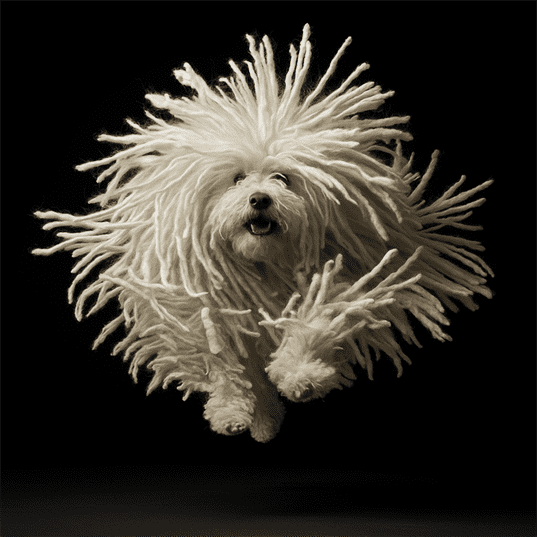
The Komondor's family tree traces back to ancient Asian livestock guardians, brought to Hungary by the Turkic Cuman people around the 12th-13th centuries, evolving from Tibetan-type dogs and related to the South Russian Ovcharka, sharing lineage with the Puli and Kuvasz as Hungarian livestock guardians, but developing independently due to different tribal origins (Cumans vs. Magyars).
Ancestral Roots
Tibetan Dogs: The Komondor's distant ancestors are believed to be Tibetan mastiff-type dogs, brought to Europe by migrating peoples.
Cuman Nomads: The breed's name, "Komondor," means "Cuman dog," directly referencing the Turkic-speaking Cumans who introduced them to Hungary.
Owtcharka Connection: They share ancestry with the South Russian Ovcharka (Aftscharka), another ancient shepherd dog from the steppes.
Hungarian Relatives (Livestock Guardian Group)
Kuvasz: A separate but related Hungarian breed, the Kuvasz, developed independently from the Komondor, bred by the Magyars while Komondors were with the Cumans.
Puli & Mudi: While the Puli and Mudi are herding dogs (smaller, agile), they are part of the same broader Hungarian pastoral family and share some common heritage with the guardian breeds like the Komondor.
Key Characteristics
Purpose: Exclusively a livestock guardian, protecting flocks from predators, not a herder.
Coat: The distinctive corded white coat camouflages them among sheep and protects them from weather and attacks.
In Summary: Think of the Komondor as a large, ancient Eastern European guardian, related to other big flock protectors (like the Kuvasz) but with a distinct Cuman lineage, different from the smaller, agile Hungarian herding breeds (Puli)