
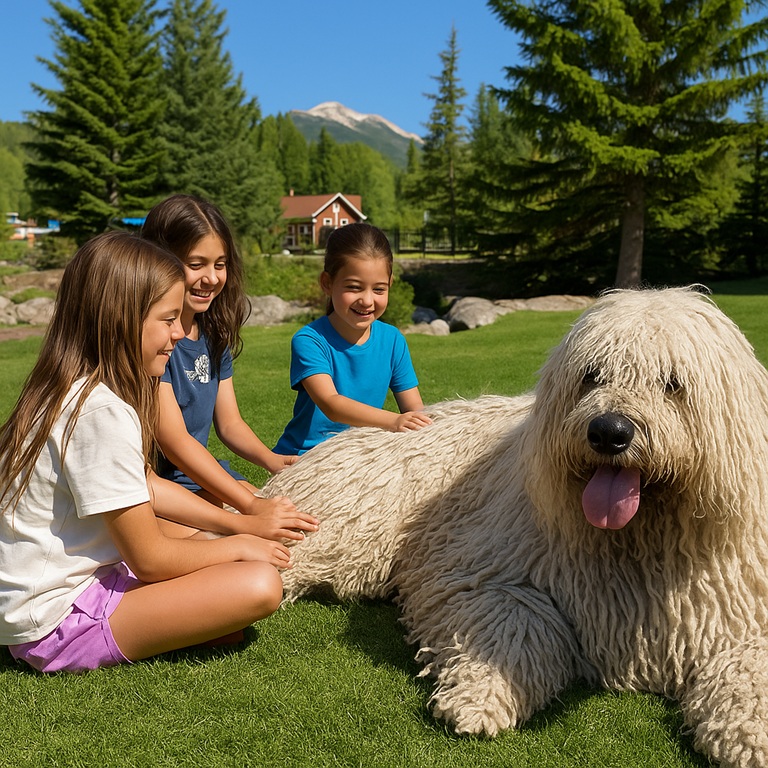
The development of the Komondor's external features was influenced by the extreme weather conditions of the Eurasian Steppe—the scorching hot summers and exceptionally harsh winters. Its special coat structure functions as a thermostat, protecting the dog from heat and cold alike. Its hair, consisting of a coarser topcoat and a finer undercoat, does not shed—the dead hair creates the matted, ribbon or corded structure of the coat. This amazing fur is not as difficult to take care of as one might think. With careful and regular maintenance, we can prevent the cords from matting together. Thanks to its structure, the coat is self-cleaning—it will return to a beautiful ivory color after drying, even if the dog decided to take a mud bath.
Due to their large size, Komondor's grow slowly, only reaching their full size when they are about two years old, and their coat takes much longer than that to grow into its full splendor. The breed can be generally described as having powerful, resistant physique, and not sensitive to environmental conditions. The same cannot be said about its “soul”. Behind the ample fur coat of Komondor's lies an even bigger heart, which sets them apart from many other large guarding dogs. The reason behind that might be that while many similar dogs were bred specifically to work independently, supervised by a single person at most, Komondor's had a closer connection with their families. They were not guarding herds put to pasture in the high mountains alone, but the campsite and later the farm, where they were kept with the livestock and the family.
They do not require rigorous training in the strict sense, they naturally know everything they need to work, there is no need to demand anything else from them. It is unnecessary to train them in guarding, as that instinct is so deeply planted in them that it would be difficult, if not impossible, to take it out of them.