
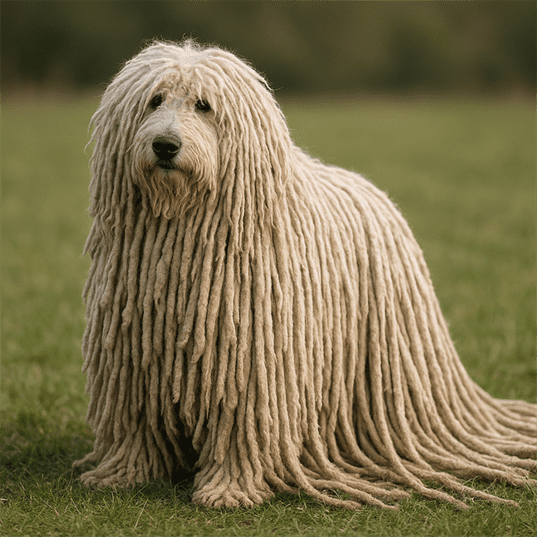
If you've ever seen a Komondor, Hungary's ancient livestock guardian dog, you might think its long, matted coat resembles a walking mop or a sheep in disguise. This isn't just quirky aesthetics—it's evolutionary genius. The Komondor's signature corded coat, which can grow up to 10 inches long and even longer with age, provides unparalleled protection from both scorching summers and biting winters. Far from being a hindrance, this dense, white fleece acts as a thermal regulator, keeping the dog comfortable year-round. In this article, we'll dive into the science and history behind this remarkable adaptation, proving why the Komondor's coat is nature's perfect all-weather armor.
Mastering the Chill: Insulation Against Freezing Temperatures
Picture the Hungarian plains in mid-winter: sub-zero winds howling across vast pastures where Komondor’s have patrolled for centuries. Bred by Magyar tribes over 1,000 years ago to protect sheep from wolves and bears, these dogs faced brutal conditions. Their coat evolved as the ultimate insulator.
The magic lies in the cords—tightly packed mats formed from the rough outer guard hairs intertwining with the soft undercoat. This structure traps millions of tiny air pockets, creating a barrier that slows heat loss from the dog's body. Air is a poor conductor of heat, so these stationary layers mimic high-end insulating materials like down feathers or wool. In fact, studies on similar corded breeds show the coat can maintain core body temperature even at -20°C ( -4°F), preventing hypothermia.
Unlike smooth-coated dogs that shiver in the cold, the Komondor's fleece doesn't mat flat when wet from snow; the cords wick moisture away, drying quickly to avoid chilling. Windproof too—the dense cords resist penetration, much like a thatched roof. Historical accounts from shepherds note Komondor's lying outdoors in blizzards, emerging unscathed while herding dogs with shorter fur sought shelter. Today, owners in cold climates like Canada or Scandinavia report their Komondor's thriving without coats, thanks to this built-in parka.
Beating the Heat: Cool Comfort in Sweltering Summers
Skeptical that such a shaggy coat handles heat? Think again. In Hungary's hot, arid summers, Komondor’s work tirelessly under the sun without overheating. The corded coat excels here by promoting ventilation and blocking solar radiation.
Each cord is a hollow tube of air, allowing breezes to flow through the coat like a chimney effect. This convection cools the skin via evaporative cooling—sweat (or rather, dogs pant, but moisture from the coat evaporates) draws heat away. A 2018 study in the Journal of Veterinary Behavior on long-haired guardian breeds found corded coats reduced skin temperature by up to 15°C (27°F) compared to shaved dogs, which suffered sunburn and heat stress.
The pale white color reflects 80-90% of UV rays, shielding the black skin beneath (yes, Komondor skin is pigmented for sun protection). Long cords shade the body, preventing direct heat absorption—similar to how Bedouin robes protect desert nomads. Shaving a Komondor is a myth-busting no-no; it strips this shade, leading to burns and poor thermoregulation. Vets recommend trimming only the face and feet for hygiene, letting the body coat do its job.
The Science of Seasonal Superpowers
Thermodynamically, the Komondor coat balances conduction, convection, and radiation. In cold, it minimizes conductive heat loss; in heat, it maximizes convective cooling. The undercoat's loft adjusts seasonally—thicker in winter, shedding in spring for airflow. Natural oils make cords water-repellent, aiding both wet-cold resistance and dry-heat wicking.
Compared to other long-haired breeds like the Puli (a relative) or Afghan Hound, the Komondor's cords are uniquely dense yet permeable, outperforming in dual extremes. Sheep with similar fleece thrive in variable climates for the same reasons—proving dogs and livestock share adaptive traits.
Practical Care for Peak Performance
To harness this coat's power:
-
Brush weekly early on to encourage even cord formation (avoid full brushing in adults).
-
Bathe sparingly with dog-safe shampoo; air-dry to maintain structure.
-
Trim tips annually to prevent mud buildup.
-
Check for mats around ears and paws.
Neglect leads to odor or parasites, but proper care keeps it lightweight and effective.
Why the Komondor Coat Inspires Awe
The Komondor's corded coat isn't just fur—it's a testament to selective breeding for survival. Protecting flocks (and itself) from Hungary's climate extremes, it embodies resilience. Whether braving blizzards or baking heat, this dog stays cool (or warm) under pressure. If you're considering a Komondor, embrace the mop—it's their superpower.
Next time you spot one, tip your hat to evolution's ingenuity.