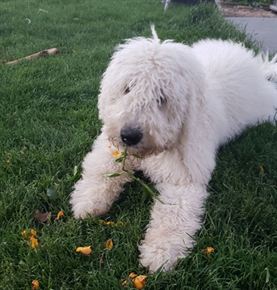
Name from Nomads – The name Komondor derives from “Komar” (the Cumans), a nomadic Turkic people who settled in Hungary in the 12th‑13th centuries and brought the dogs with them.
Ancient Magyar Companion – The breed arrived in the Carpathian Basin with the Magyar tribes around 900 AD, making it over a millennium old.
Sheep‑Camouflage Coat – The cords formed naturally to mimic the texture of sheep’s wool, allowing the dog to blend into the flock and ambush predators undetected.
Post‑War Military Use – After WWII, the Hungarian military deployed Komondors as sentry dogs for border patrols and to guard ammunition depots.
Puppy Color Shift – All Komondor puppies are born pure white; the coat gradually darkens to ivory or light gray over the first year as the cords trap oils and debris.
Bear‑Like Gait – They possess a distinctive “rolling” ambling gait that resembles a bear’s walk, an energy‑efficient stride evolved for covering vast pastureland.
Thermal Insulation Paradox – Despite the thick coat, the cords provide both cold and heat insulation, allowing Komondor’s to tolerate temperature extremes better than many short‑haired breeds.
Shepherding Folklore – Hungarian shepherds believed the Komondor had a spiritual bond, claiming it could “see evil” and that its presence warded off not just wolves but also malevolent spirits.
Precise Flock Discrimination – Livestock guardians can identify their own sheep from strangers with remarkable accuracy, even without formal training, a trait honed over centuries of solitary guarding.