
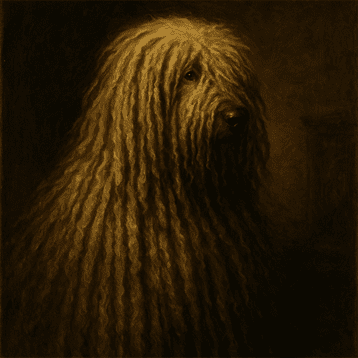
AKC Official Standard for the Komondor
The following is a structured text list summarizing the American Kennel Club (AKC) Official Standard for the Komondor (approved by the Komondor Club of America and the AKC Board, effective as of the latest revision). This is organized by major sections for clarity, with key details extracted and listed. For the full verbatim standard, refer to the official AKC website.
General Appearance
- Large, powerful, impressive livestock guardian dog.
- Bold, calm demeanor with dignified carriage.
- Heavy white coat forming natural cords; cords longer on back, rump, and sides.
- Overall impression: imposing stature, muscular build, fearless protector.
Size, Proportion, Substance
- Height (measured at withers):
- Dogs: Minimum 27½ inches (70 cm); preferred 27¾+ inches.
- Bitches: Minimum 25½ inches (65 cm); preferred 25¾+ inches.
- Weight: Proportionate to height; dogs 80+ lbs (36+ kg), bitches 60+ lbs (27+ kg).
- Proportion: Square build; height from withers to ground equals length from prosternum to point of buttocks.
- Substance: Heavy bone, well-muscled without coarseness.
Head
- Large, carried horizontally, in line with spine.
- Expression: Serious, intelligent, alert.
- Skull: Broad, slightly domed; occiput not prominent.
- Stop: Moderate.
- Muzzle: Slightly shorter than skull (4:5 ratio); wide, tapering little; square end.
- Lips: Thick, dark pigment; tight.
- Bite: Scissors or level preferred; full dentition.
- Ears: Long (¾ length of muzzle), hanging "V" shape; low-set, framing head.
- Eyes: Dark brown, almond-shaped; white or bluish excluded.
- Nose: Black, large.
Neck
- Strong, muscular, of medium length.
- Arches gracefully into shoulders; no dewlap.
Body
- Topline: Straight, firm; level from withers to croup.
- Back: Broad, muscular; short relative to body.
- Loin: Short, wide, muscular.
- Croup: Level with topline, broad.
- Chest: Deep (reaches elbows), wide; well-sprung ribs.
- Underline: Tucks up slightly toward rear.
- Tail: Medium length; carried low, saber-like; may curve slightly but not over back.
Forequarters
- Shoulders: Well-muscled, laid back.
- Upper Arm: Equal to shoulder blade length.
- Elbow: Close to body.
- Forelegs: Straight, muscular, heavy bone; pasterns strong, upright.
- Feet: Large, round ("cat feet"); dark nails; heavy pads; interdigital webbing.
Hindquarters
- Angulation: Matches forequarters for square outline.
- Upper Thigh: Broad, muscular.
- Stifle: Well-bent.
- Hock: Well-let-down, straight.
- Rear Legs: Parallel when viewed from rear; heavy bone.
- Feet: Same as forefeet.
Coat
- Texture: Medium-hard, dense; forms natural cords (not mats or tassels).
- Length: Long on rump/sides (10+ inches/25+ cm); shorter on head/shoulders.
- Cords: Heavy, twisted ropes; puppy coat fluffy, cords develop by 2 years.
- Undercoat: Dense woolly; sheds into cords.
- Presentation: Natural cords; may be trimmed around feet/pads/sanitary areas.
Color
- White; off-white/pale shades allowed.
- Skin: Pigmented (slate gray preferred).
- Nose/lips/eye rims: Black.
- Faults: Self-colored, spotted, or shaded coats.
Gait
- Bold, free, vigorous trot.
- Effortless movement; good reach and drive.
- Topline remains firm; parallel action.
Temperament
- Loyal, protective, devoted to family/flock.
- Calm, self-confident; courageous guardian.
- Gentle with family/charges; aloof with strangers.
- Intelligent, independent; requires firm, consistent training.
Faults
- General: Timidness, hyperactiveness, any deviation from square proportion.
- Head: Narrow skull/muzzle, pendulous flews, light eyes.
- Body: Roach/carp/wasp waist, shallow chest, high tail carriage.
- Coat: Short cords (<2 years), parted cords, artificial parting/trimming.
- Pigmentation: Lack of black nose/eye rims.
- Movement: Hackney gait, stilted action.
Disqualifications
- Unilateral/bilateral cryptorchid.
- Viciousness or extreme shyness.
- Any color other than white (or off-white shades).
Note: Dogs competing in regular classes must be corded naturally. This list is for informational purposes; judges evaluate dogs against the full standard holistically, penalizing faults proportionally to severity.